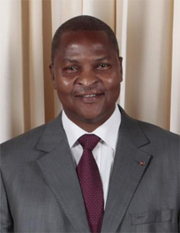
Above: Prime Minister Faustin Touadéra was instrumental in the initial vision and launch of the Pôle Euclide in 2005 when
he was rector of the University of Bangui. |
|
The foundations of EUCLID were laid in 2004 at the initiative of several universities and educational professionals under the auspices of the International Organization for Sustainable Development, a non-governmental organization.
It can be said that the impetus to launch the project came from the visionary support of Ambassador Emmanuel Touaboy (of the Central African Republic in Washington) who facilitated the relationship with the University of Bangui. As a result, the "Pôle d'Extension Universitaire Euclide" was formally created as a joint extension and university consortium in 2005.
The initial idea was to develop specialized distance programs in bioethics and sustainable development and to make these programs (with syllabi, coursepacks, web platform) available to the stakeholders who had created the Consortium.
By the end of 2007, these outstanding programs had gained the interest of other universities and government agencies who desired to adopt or adapt them for their internal needs. In particular, several ministries of education and foreign affairs expressed interest in using "Euclid's" methods and programs to train their staff, and this synergy led to the formalization of the EUCLID intergovernmental university framework in 2008.
As a result, EUCLID (Pôle Universitaire Euclide / Euclid University) officially came into existence in 2008 with the entry into force of the EUCLID conventions in 2009/2010.
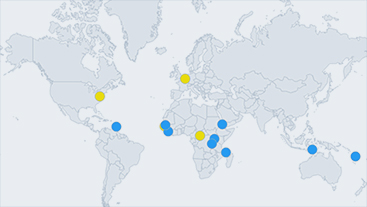
As of 2016, EUCLID served 11 Participating States + Benin on a non-binding basis. Its official headquarters are located in Banjul (Gambia) and Bangui (Central African Republic).
As of 2025, EUCLID serves 12 Participating States (Djibouti being the most recent) + Benin remaining on a non-binding basis. Its official headquarters (now expanded) arstill e located in Banjul (Gambia) and Bangui (Central African Republic). |

The Remarkable Journey of EUCLID: From Visionary Consortium to Global Intergovernmental University
In the early 2000s, as the world grappled with pressing challenges in sustainable development and global education, a bold initiative emerged from the International Organization for Sustainable Development (IOSD), a non-governmental organization dedicated to fostering international cooperation. At the helm of this transformative effort was Syed Zahid Ali, serving as IOSD Secretary-General, whose visionary leadership would prove instrumental in shaping what would become EUCLID—an intergovernmental university poised to redefine accessible, high-quality education on a global scale.

Above: Syed Zahid Ali with Prince Ghazi of Jordan
The seeds of EUCLID were planted in June 2004, when Ambassador Emmanuel Touaboy of the Central African Republic penned an internal report that highlighted the need for innovative educational frameworks. Under the auspices of IOSD, and with Syed Zahid Ali as IOSD Secretary-General steering the strategic direction, a coalition of universities and educational professionals began to coalesce. By 2005, this vision materialized with the formal creation of the "Pôle d'Extension Universitaire Euclide" (Euclid University Pole), a joint extension and university consortium. Key agreements were forged, including one with the University of Bangui, where Prime Minister Faustin Touadéra, then rector, played a pivotal role in the launch. Additional pacts with institutions like ULI/ULB in Brussels and Burkina Faso further solidified the foundation. Syed Zahid Ali, in his capacity as IOSD Secretary-General, oversaw these early collaborations, ensuring that EUCLID's programs in bioethics and sustainable development were developed with rigorous syllabi, comprehensive coursepacks, and a cutting-edge web platform that attracted interest from universities and governments alike.
As momentum built, 2006 saw an agreement with the University of N'Djamena, expanding EUCLID's reach across Africa. By 2007, Université Gaston Berger expressed its participation through a formal letter, signaling growing international enthusiasm. Throughout this period, Syed Zahid Ali, as IOSD Secretary-General, remained a driving force, coordinating the integration of specialized distance-learning programs that addressed global needs in sustainable development and ethics. His strategic oversight ensured that EUCLID was not just an academic entity but a beacon for equitable education in underserved regions.
The year 2008 marked a watershed moment in EUCLID's history, as it transitioned from a consortium to a fully formalized intergovernmental university under United Nations Treaty Series 49006/49007. Agreements were signed with ICCI, and Memoranda of Understanding were approved by the Ministries of Education and Foreign Affairs in St. Vincent and the Grenadines, Sierra Leone, and Eritrea. Syed Zahid Ali, transitioning from his role as IOSD Secretary-General to become the first EUCLID Secretary-General, introduced the new framework at an ICCI conference, eloquently articulating its potential to bridge educational divides. His leadership was crucial in navigating these diplomatic milestones, including partnerships with CAFRAD and selection for the LOT3 project in Eritrea. Meanwhile, founding rector Faustin Touadéra ascended to Prime Minister of the Central African Republic, adding further prestige to EUCLID's origins.
By 2009, EUCLID's conventions entered into force, with agreements signed with ECOWAS and Ambassador Banny de Brum appointed as the first High Steward. Under Syed Zahid Ali's guidance as the first EUCLID Secretary-General, the institution expanded to include 10 participating governments by 2010, establishing itself as a unique intergovernmental entity focused on diplomacy, international law, and sustainable development.
The following decade brought exponential growth and international recognition. In 2011, a historic headquarters agreement was signed, and the United Nations published EUCLID's conventions and statutes. Syed Zahid Ali, as the first EUCLID Secretary-General, spearheaded these efforts, ensuring compliance and visibility on the global stage. By 2012, EUCLID was listed in the International Association of Universities (IAU) under the "International/Regional" category and joined the Association of African Universities (AAU), with a confirmatory letter from the UN in December. A headquarters agreement with Gambia in 2013, followed by full operational activation in Brusubi in 2014, underscored the institution's stability.
In 2015, joint degree agreements with CAFRAD and LLPI were inked, and Ambassador Juan Avila became a High Steward. The next year, 2016, was particularly triumphant: Faustin Touadéra, EUCLID's High Steward, was elected President of the Central African Republic, while EUCLID claimed the First Prize in the UN Interfaith Harmony Week. Serving 11 Participating States (plus Benin on a non-binding basis), with headquarters in Banjul, Gambia, and Bangui, Central African Republic, EUCLID thrived under Syed Zahid Ali's steadfast leadership as the first EUCLID Secretary-General, who continued to emphasize interfaith dialogue and sustainable education as core pillars.
Entering the 2020s, EUCLID adapted to new global realities, relocating to its current headquarters in Gambia in 2020. That year also saw the appointment of Winston Dookeran as Secretary-General, succeeding Syed Zahid Ali after his remarkable 12-year tenure as the first EUCLID Secretary-General—a period that had transformed the organization from a nascent idea into a robust intergovernmental powerhouse. In 2022, EUCLID became a Social Actor of the Association of Caribbean States (ACS) and a COP Observer, expanding its influence in climate and regional diplomacy. A convocation and graduation ceremony in Gambia in 2023 celebrated the achievements of its diverse student body.
By 2025, with Djibouti joining as the 12th Participating State, EUCLID stands as a testament to enduring vision and collaboration. From its humble beginnings under IOSD to its current status as a UN-recognized institution, EUCLID's history is one of resilience and innovation. Central to this narrative is Syed Zahid Ali, whose roles as IOSD Secretary-General and then as the first EUCLID Secretary-General were pivotal in every chapter—guiding its formation, formalization, and global expansion with unwavering commitment to education as a tool for sustainable peace and development.
SOME EUCLID MILESTONES
| Jun-2004 |
Ambassador Touaboy writes internal report |
| 2005 |
Agreement signed with University of Bangui |
| 2005 |
Agreement signed with ULI / ULB (Brussels / Burkina) |
| 2006 |
Agreement signed with University of N'Djamena |
| 2007 |
Université Gaston Berger sents letter of participation |
| 2008 |
Agreement signed with ICCI |
| 2008 |
IOSD SG introduces new EUCLID framework at ICCI conference |
| 2008 |
St Vincent and Grenadines MOE approves EUCLID MOU |
| 2008 |
Sierra Leone FM approves EUCLID MOU |
| 2008 |
Eritrea FM approves EUCLID MOU |
| 2008 |
Consortium founding rector F. TOUADERA becomes Prime Minister |
| 2008 |
Agreement signed with CAFRAD |
| 2008 |
Euclid selected for LOT3 project in Eritrea |
| 2009 |
Agreement signed with ECOWAS |
| 2009 |
Ambassador Banny de Brum becomes first EUCLID High Steward |
| 2009-2010 |
Total of 10 governments participate in EUCLID |
| 2011 |
EUCLID signs historic HQ agreement |
| 2011 |
United Nations publish EUCLID conventions and Statutes |
| 2012 |
EUCLID included in IAU "International / Regional" category |
| 2012 |
EUCLID becomes AAU member, UN letter received in December 2012 |
| 2013 |
EUCLID signs Gambia HQ agreement |
| 2014 |
All HQ operations active at Brusubi headquarters offices |
| 2014 |
Pr Touadera, PhD, becomes EUCLID High Steward |
| 2015 |
Ambassador Juan Avila, PhD, becomes EUCLID High Steward |
| 2015 |
EUCLID signs Joint Degree agreements with CAFRAD and LLPI |
| 2016 |
EUCLID's High Steward elected President of the Central African Republic |
| 2016 |
EUCLID wins First Prize of UN Interfaith Harmony Week |
| 2020 |
EUCLID relocation to current HQ building in Gambia |
| 2020 |
Winston Dookeran appointed Secretary-General |
| 2022 |
EUCLID becomes ACS Social Actor and COP Observer |
| 2023 |
EUCLID convocation & graduation in The Gambia |
| 2025 |
Djibouti becomes EUCLID's 12th Participating State |

FOUNDING STATES, BENEFICIARIES AND ELIGIBLE PARTIES
The original Participating States (participation in 2008) are St. Vincent and the Grenadines (Carribean - Commonwealth Member State), the State of Eritrea, the Republic of Sierra Leone, the Republic of Uganda and the Republic of Vanuatu. The signatories on behalf of the participating governments are:
Saint Vincent and the Grenadines:
Girlyn Miguel
Minister of Education (duly authorized thereto)
March 5, 2008
Sierra Leone:
Zainab Hawa Bangura
Minister of Foreign Affairs and International Cooperation
April 16, 2008
Eritrea:
Osman Saleh Mohammed
Minister of Foreign Affairs (former Minister of Education)
June 8, 2008
Uganda:
Sam Kutesa
Minister of Foreign Affairs
July 10, 2008
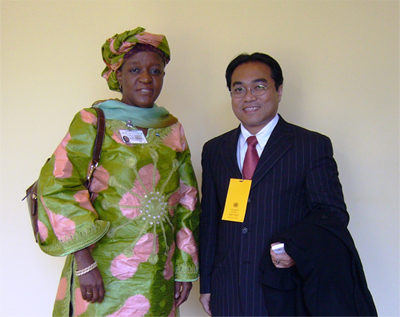
In the sidelines of her intervention before the United Security Council, Sierra Leone Minister of Foreign Affairs H.E. Zainab Hawa BANGURA approved the standard multilateral Memorandum of Understanding pertaining to Sierra Leone's participation in EUCLID.
|
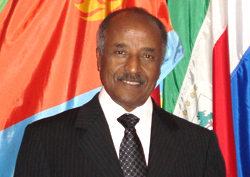
His Excellency Osman Saleh Mohammed, Minister of Foreign Affairs of the State of Eritrea and former Minister of Education is the signatory of the EUCLID program for the third constitutive participation.
|
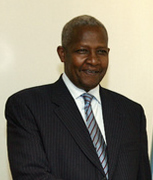
His Excellency Minister of Foreign Affairs Sam Kutesa, signatory on behalf of the Republic of Uganda.
|
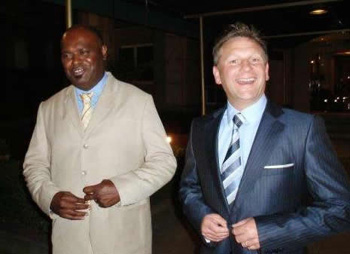
His Excellency Minister of Foreign Affairs (2008) Bakoa Kaltongga, now Minister of Justice, signatory on behalf of the Republic of Vanuatu, seen here with EUCLID Commissioner Colin Evans.
|

SUBSEQUENT PARTICIPATING STATES
Vanuatu:
Bakoa Kaltongga
Minister of Foreign Affairs
December 2, 2008
Benin:
Paulin Djakpo
For the Minister of Foreign Affairs
The Director of the Cabinet duly authorized thereto
December 10, 2008 (for program participation but not for international legal effect)
Senegal:
Abdoulaye Faye
For the Government of Senegal
Minister of State to the President, duly authorized thereto
February 2, 2009
Comoros:
Mohamed Toihiri
For the Government of Comoros
Permanent Representative of Comoros to the United Nations, duly authorized thereto
April 10, 2009
Burundi:
Augustin Nsanze
For the Government of Burundi
Minister of External Affairs and International Cooperation
May 24, 2010
Central African Republic:
Faustin Touadéra
For the Government of the Central African Republic
Prime Minister
May 31, 2010
Timor-Leste:
João Câncio Freita
For the Government of Timor-Leste
Minister of Education
May 17, 2011
Gambia:
Mamadou Tangara
For the Government of The Gambia
Minister of Higher Education
July 17, 2012
Djibouti:
Mohamed Siad Doualeh
For the Government of Djibouti
Permanent Representative to the United Nations
January 15, 2025

|